
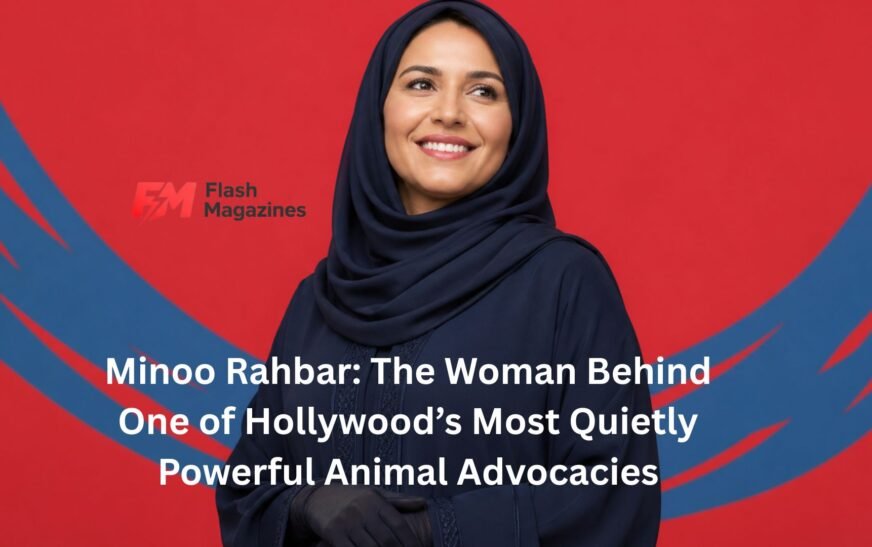
If you’ve ever gone down a late-night rabbit hole about animal rescue stories in Los Angeles, there’s a good chance you’ve brushed up against the name Minoo Rahbar. Not in flashing headlines. Not in loud campaigns. But in the kind of steady, behind-the-scenes work that actually changes lives—mostly the ones that don’t speak.
She isn’t a celebrity in the traditional sense. No blockbuster credits, no red carpet persona of her own. And yet, her influence stretches far wider than many public figures. It’s quiet, persistent, and deeply personal.
Here’s the thing: people like her don’t usually get long profiles. They’re too busy doing the work.
A Life That Didn’t Start in the Spotlight
Minoo Rahbar wasn’t born into Hollywood. She was born in Iran and later moved to the United States. That transition alone shapes a person. New country, new systems, new ways of living. For many, that kind of shift builds resilience. For her, it also sharpened something else—empathy.
You can see it in the way she approaches animals. Not as projects. Not as charity cases. But as individuals that need attention, patience, and consistency.
Imagine moving into a completely new environment where nothing feels familiar. Now imagine being a stray dog in a massive city like Los Angeles. That comparison might sound simple, but it explains a lot about how she works.
Not Just an Advocate — Someone Who Shows Up
A lot of people love animals. Fewer people actually show up for them day after day. Rain, heat, long drives across the city, endless vet visits.
Minoo Rahbar is firmly in that second group.
Her work revolves around rescuing, rehabilitating, and rehoming animals—especially dogs that others overlook. The injured ones. The older ones. The ones that don’t photograph well.
That’s where things get real.
It’s easy to share a cute puppy video. It’s harder to take in a dog that needs surgery, time, and money with no guarantee of adoption. She does that anyway.
There’s a kind of stubborn kindness in that. The kind that doesn’t need applause.
The Partnership That Gets Noticed
You might also hear her name alongside Danny Trejo. Yes, that Danny Trejo—the actor known for tough-guy roles in films like Machete.
On screen, he plays characters you wouldn’t want to cross. Off screen, he runs a dog rescue and speaks openly about second chances. That alignment isn’t accidental.
Together, they’ve built something that works because it’s grounded in action. Not branding.
Their rescue efforts focus heavily on giving animals a real shot at life, not just temporary care. It’s not about numbers. It’s about outcomes.
And honestly, that’s rare.
The Reality of Animal Rescue in Los Angeles
Let’s talk about the environment she operates in.
Los Angeles is a massive city with a serious stray and shelter overcrowding problem. Every week, animals are at risk of being euthanized simply because there isn’t enough space.
Now imagine trying to fight that with limited resources.
That’s the daily backdrop for Minoo Rahbar’s work.
A typical scenario? Someone finds a stray dog on the street. They post about it online. Maybe they wait a day or two. Then reality hits—no one steps up. That’s when people like her get involved.
She doesn’t just take the dog in. She coordinates vet care, evaluates behavior, arranges fostering, and works toward adoption.
Each step costs time and money. And emotional energy, which people rarely talk about.
The Emotional Side Most People Miss
Here’s where things get heavier.
Rescue work isn’t just logistics. It’s emotional weight.
Some animals arrive in terrible condition—injured, neglected, or traumatized. Not all of them make it. That’s the part that doesn’t trend online.
You can imagine how that builds up over time.
And yet, she keeps going.
There’s a certain mindset required for that. You can’t shut off emotionally, but you also can’t let it consume you. It’s a balance that most people never have to figure out.
Why Her Approach Feels Different
A lot of advocacy today leans heavily on visibility. Social media campaigns. Viral posts. Awareness drives.
Those things matter, sure. But they don’t replace hands-on work.
Minoo Rahbar’s approach is grounded in something simpler: direct impact.
She’s not trying to build a massive public persona. She’s trying to solve problems in front of her.
That might mean driving across the city at midnight to pick up an injured dog. Or spending hours coordinating with vets. Or following up with adopters weeks later.
It’s not glamorous. But it’s effective.
Small Wins That Actually Matter
In this kind of work, success doesn’t always look big.
Sometimes it’s a dog finally trusting a human again.
Sometimes it’s a quiet adoption—no big announcement, just a new home and a second chance.
Sometimes it’s preventing a situation from getting worse.
Those small wins stack up.
Think about it like this: if one person consistently helps even a handful of animals each month, over years, that number grows into hundreds. Maybe more.
That’s impact.
What People Can Learn From Her Work
You don’t need to run a rescue operation to take something from this.
There’s a practical lesson here about responsibility.
A lot of problems feel too big to touch. Animal welfare, homelessness, environmental issues. It’s easy to scroll past and think, “Someone else will handle it.”
But here’s the thing: most of the time, “someone else” is just a handful of individuals doing more than their share.
Minoo Rahbar is one of those people.
And her work shows that you don’t need perfect conditions to start helping. You just need to start.
The Quiet Influence
What makes her story interesting isn’t fame. It’s consistency.
Over time, that kind of work changes how people around you think and act.
People who adopt from rescues instead of buying pets.
People who choose to foster.
People who stop ignoring stray animals and actually do something.
That ripple effect matters more than any single rescue.
The Takeaway
Not every impactful life looks loud from the outside.
Minoo Rahbar’s work sits in that space most people overlook—steady, demanding, and deeply human. She’s not chasing attention. She’s solving real problems, one animal at a time.
And maybe that’s the point.
You don’t have to build something massive to make a difference. You just have to care enough to keep showing up, especially when it’s inconvenient.
Because in the end, that’s what actually changes things.