
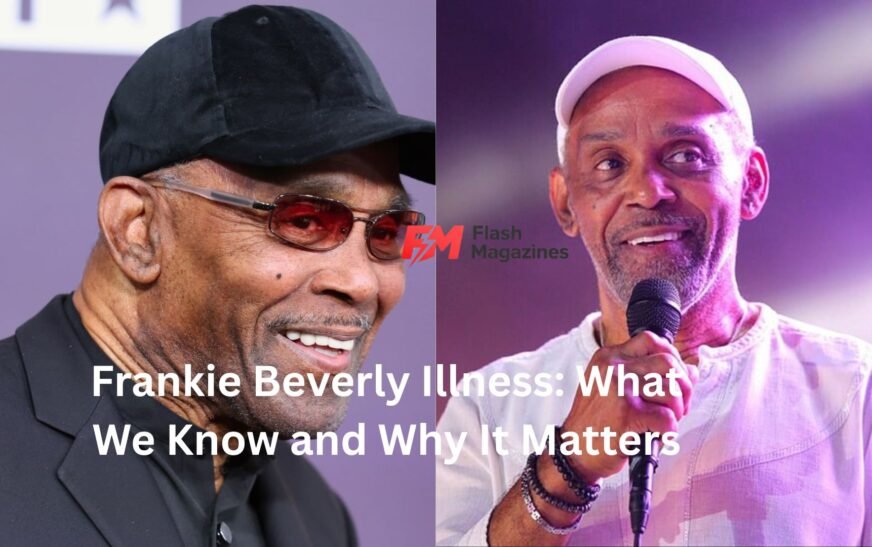
Frankie Beverly has always carried a certain quiet strength. If you’ve ever heard Before I Let Go or Golden Time of Day, you know what I mean. His voice doesn’t shout. It settles in, wraps around you, and stays there. So when conversations started circling about Frankie Beverly’s illness, people paid attention—not out of gossip, but concern.
Because with artists like him, it’s never just about the music. It’s about what they represent.
The Man Behind the Voice
Before getting into the health side of things, it helps to understand who Frankie Beverly is beyond the headlines. He’s not the kind of performer who chases attention. No flashy antics. No constant media presence. Just consistency.
For decades, Maze featuring Frankie Beverly has been a staple—especially in Black communities across the U.S. If you’ve been to a family cookout, a reunion, or even just a long drive with the right crowd, you’ve probably heard his music in the background.
And here’s the thing—he’s always felt accessible. Like someone you could actually talk to. That’s part of why any news about his health hits differently.
The Rumors and the Reality
Let’s be honest—whenever a public figure steps back or slows down, rumors start flying. Frankie Beverly hasn’t been as active in recent years, and that naturally led to speculation about his health.
There hasn’t been a long list of detailed, public medical disclosures. He’s kept things relatively private, which is his right. But there have been enough signs—canceled performances, reduced touring, visible changes during appearances—that people started connecting dots.
Some fans noticed that his energy on stage wasn’t quite the same. Others pointed out that his voice, while still soulful, carried a different texture. That doesn’t automatically mean something serious, but it does raise questions.
And when you care about someone’s work, you notice the small shifts.
Aging, Touring, and the Toll It Takes
Now, here’s where perspective matters. Frankie Beverly was born in 1946. That puts him well into his late 70s. At that age, even everyday routines can feel heavier. Touring, performing, traveling constantly—it’s not light work.
Think about it. Long flights. Late nights. Sound checks. Standing for hours. Repeating that cycle again and again. Even younger artists burn out from it.
So part of what people are seeing might not be a specific illness, but the natural wear that comes with a long life in music.
I remember watching an older artist perform a few years ago—someone who had clearly slowed down. The crowd didn’t care. They weren’t there for perfection. They were there for presence. That’s where Frankie Beverly sits now for a lot of fans.
Still, aging alone doesn’t explain everything, and that’s why the illness conversation hasn’t gone away.
Health Concerns Fans Have Noticed
While there hasn’t been a confirmed, widely publicized diagnosis, fans have pointed to a few recurring concerns.
One is vocal strain. His voice has always been smooth, but in later performances, there have been moments where it sounds thinner or more fragile. That can come from years of singing, sure—but also from underlying health issues.
Another thing people mention is physical movement. He appears more reserved on stage. Less movement, more standing still. Again, that could be age. Or it could be fatigue or discomfort tied to health.
Then there are the cancellations. When shows get postponed or called off, especially repeatedly, people start to assume something deeper is going on.
But here’s the tricky part—none of this equals a confirmed illness. It’s observation, not diagnosis.
Privacy vs. Public Curiosity
This is where things get a bit uncomfortable.
Fans feel invested. That’s natural. When someone’s music has been part of your life for decades, you feel connected. You want to know what’s happening. You want reassurance that they’re okay.
But artists don’t owe the public their medical records.
Frankie Beverly has always been a private person. He’s not someone who shares every detail of his personal life, and that includes his health. That choice deserves respect, even if it leaves questions unanswered.
It’s a bit like seeing an old neighbor less often. You wonder how they’re doing, maybe even worry—but you don’t knock on their door demanding answers.
The Emotional Weight of It All
There’s another layer here that doesn’t get talked about enough.
When people search for “Frankie Beverly illness,” they’re not just looking for facts. They’re bracing themselves. Preparing, in a way, for the possibility that someone they admire might be slowing down for good.
Music ties itself to memory. First dances. Long drives. Summer nights. When the artist behind those moments starts to fade, it feels personal.
You’re not just worried about Frankie Beverly. You’re worried about what it means.
Signs of Resilience
Despite the concerns, it’s important not to overlook something else—he’s still here. Still performing when he can. Still showing up.
That matters.
There’s a quiet resilience in continuing to do what you love, even when it’s harder than it used to be. You can see it in the way he carries himself on stage. No rush. No need to prove anything.
He’s earned the right to move at his own pace.
And honestly, there’s something powerful about that. In a world obsessed with constant output, Frankie Beverly represents endurance.
What Fans Can Do
Now, you might be wondering—what’s the right way to respond to all this?
Support doesn’t always mean digging for more information. Sometimes it’s simpler than that.
Listen to the music. Go to a show if he’s performing nearby. Share memories. Introduce his songs to someone younger.
I’ve seen this happen at gatherings where someone plays Joy and Pain, and suddenly everyone—different ages, different backgrounds—locks into the same rhythm. That’s legacy in real time.
Worrying is natural. But appreciation goes further.
The Bigger Picture
Frankie Beverly’s situation isn’t unique. A lot of legendary artists reach a point where health, age, and lifestyle intersect in complicated ways.
Some step away completely. Others keep going, adjusting as they need to. There’s no single right path.
What makes Frankie Beverly stand out is how gracefully he’s handled that transition. No dramatic announcements. No farewell tours filled with spectacle. Just a gradual shift.
And maybe that fits him perfectly.
Why This Conversation Keeps Coming Back
People keep searching for updates about Frankie Beverly’s illness because uncertainty is hard to sit with.
Clear answers feel better. Even if they’re not good news, at least they’re solid.
But in this case, the lack of detailed information means the story stays open-ended. And that keeps the conversation alive.
It also reflects something broader—how we deal with aging icons. We want them to stay exactly as we remember them. But time doesn’t work like that.
A Natural Ending, Whenever It Comes
There’s no confirmed timeline. No official statement outlining exactly what Frankie Beverly is dealing with. And maybe there never will be.
What we do know is this—he’s had a long, impactful career. He’s influenced generations. And he’s done it without chasing trends or headlines.
At some point, whether due to illness, age, or simply choice, every artist steps away.
When that happens for Frankie Beverly, it won’t erase what he’s built. If anything, it’ll highlight it.
Final Thoughts
Frankie Beverly’s health remains mostly private, and that uncertainty can be frustrating if you’re looking for clear answers. But it also offers a reminder—sometimes the full story isn’t ours to know.
What is ours is the music. The memories. The moments tied to his voice.
So instead of focusing only on what might be wrong, it’s worth paying attention to what’s still there.
A song that still hits.
A voice that still carries meaning.
And a legacy that isn’t going anywhere.