

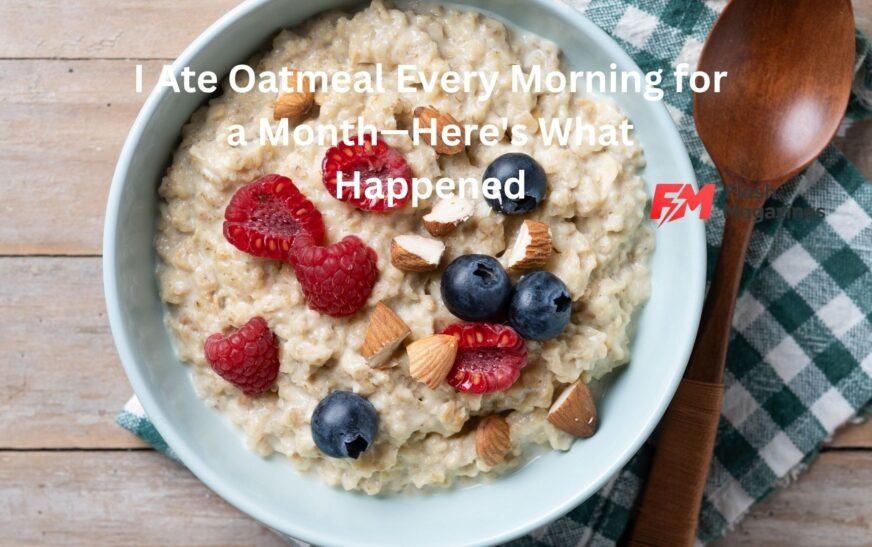
Breakfast habits can be surprisingly personal. Some people grab a coffee and rush out the door. Others skip breakfast entirely and hope lunch arrives quickly. I used to bounce between both approaches until I decided to try something simple: eating oatmeal every morning for a full month.
At first, it sounded almost boring. Oatmeal isn’t exactly the breakfast people brag about on social media. It doesn’t have the excitement of pancakes or the convenience of a breakfast sandwich from a drive-thru.
Still, oatmeal has a reputation for being healthy, filling, and affordable. I wanted to find out whether eating it every morning would actually make a noticeable difference in daily life.
After thirty days, I had a few surprises.
Table of Contents
- Why I Decided to Eat Oatmeal Every Morning
- The First Week Was Harder Than Expected
- My Energy Levels Started to Change
- Hunger Became Easier to Manage
- What Happened to My Digestion
- The Unexpected Impact on My Grocery Budget
- How I Kept Oatmeal From Becoming Boring
- Did My Weight Change?
- The Downsides Nobody Talks About
- What I Learned After One Month
- Would I Keep Eating Oatmeal Every Morning?
Why I Decided to Eat Oatmeal Every Morning
The decision wasn’t driven by some dramatic health goal.
I simply wanted a breakfast that was consistent.
Many mornings started with standing in front of the refrigerator wondering what to eat. Sometimes I’d grab something sugary. Other days I’d skip breakfast completely. Neither approach seemed ideal.
Oatmeal checked several boxes. It was inexpensive, easy to prepare, and widely recommended by nutrition experts. More importantly, it removed the daily decision-making process.
Every morning, I knew exactly what breakfast would be.
That alone felt refreshing.
The First Week Was Harder Than Expected
Let’s be honest.
The biggest challenge wasn’t cooking oatmeal. It was resisting the urge to switch things up.
By day three, I was already craving variety.
The plain bowl of oats that seemed comforting on Monday felt less exciting by Thursday. That’s when I realized something important: oatmeal needs companions.
Adding sliced bananas helped. A handful of berries made a difference. Cinnamon transformed the flavor without adding much effort.
One morning I mixed in chopped apples and a sprinkle of walnuts. Another day I added peanut butter. Suddenly the experience felt much less repetitive.
The lesson arrived early. Oatmeal itself is simple, but the possibilities around it are surprisingly flexible.
My Energy Levels Started to Change
Around the second week, I noticed something subtle.
The mid-morning energy crash that used to show up around 10 or 11 a.m. wasn’t hitting as hard.
Before this experiment, I’d often feel hungry shortly after breakfast. A sugary pastry or sweet cereal could provide a quick burst of energy, but it rarely lasted.
Oatmeal felt different.
The fullness arrived gradually and stayed around longer.
One particularly busy workday stood out. I had several back-to-back tasks and completely forgot about snacks until lunchtime. Normally I’d be searching drawers for crackers or reaching for another coffee.
Instead, I felt steady.
Not energized in some magical way. Just stable.
Sometimes stability is more valuable than excitement.
Hunger Became Easier to Manage
This was probably the biggest change.
Many people underestimate how much breakfast affects the rest of the day.
When I started eating oatmeal consistently, I noticed fewer random cravings. The urge to grab chips, cookies, or whatever happened to be nearby became less frequent.
Here’s a small real-world example.
Imagine it’s 10:30 in the morning. Someone brings donuts into the office. On a normal day, grabbing one feels almost automatic.
After a bowl of oatmeal, the situation changed. The donuts still looked good, but the desperation wasn’t there.
Having choices instead of cravings controlling decisions felt surprisingly empowering.
That’s not to say oatmeal eliminated hunger completely. It simply made hunger feel more predictable.
What Happened to My Digestion
Nobody gets excited talking about digestion, but it’s worth mentioning because it was one of the most noticeable outcomes.
Oats contain fiber, and increasing fiber intake tends to affect the digestive system fairly quickly.
After the first week, things felt more regular.
There was less bloating than I expected. Meals throughout the day seemed easier to handle. The digestive discomfort that occasionally showed up after heavy dinners became less common.
Of course, individual experiences vary. Everyone’s body responds differently.
Still, if there’s one area where oatmeal delivered exactly what people often claim, it was digestive support.
The improvement wasn’t dramatic.
It was simply consistent.
And consistency matters.
The Unexpected Impact on My Grocery Budget
One benefit rarely gets enough attention.
Oatmeal is cheap.
Very cheap.
When breakfast costs several dollars every day, those expenses add up faster than most people realize.
A container of oats lasted a long time and provided numerous breakfasts for a fraction of the cost of takeout meals.
During the month, I found myself spending less on convenience foods. Fewer coffee shop breakfast runs. Fewer impulse purchases.
The savings weren’t life-changing, but they were noticeable.
For anyone trying to eat healthier without spending more money, oatmeal deserves serious consideration.
Healthy eating often gets associated with expensive specialty foods.
Oatmeal quietly proves otherwise.
How I Kept Oatmeal From Becoming Boring
Variety became essential.
Without it, I probably wouldn’t have lasted the entire month.
Fortunately, oatmeal works almost like a blank canvas.
Some mornings leaned sweet. Others leaned savory.
A few combinations became favorites:
- Banana and cinnamon
- Blueberries with almonds
- Apple and walnuts
- Peanut butter and sliced strawberries
One weekend I tried adding a small drizzle of honey and some pumpkin seeds. It felt completely different despite using the same basic ingredient.
Here’s the thing.
Most people who dislike oatmeal aren’t actually tired of oatmeal. They’re tired of eating it the exact same way every day.
Changing toppings changes the experience.
Did My Weight Change?
Many people ask this question first.
The answer is yes, but probably not for the reason some expect.
I didn’t suddenly lose a dramatic amount of weight.
What happened was more gradual.
Because oatmeal kept me fuller for longer periods, I naturally snacked less often. Those small reductions in extra calories accumulated over time.
The scale moved slightly downward by the end of the month.
More importantly, my eating habits felt more controlled.
That’s often a healthier goal than obsessing over specific numbers.
Weight management usually comes from consistent habits rather than miracle foods.
Oatmeal wasn’t magic.
It simply made good decisions easier.
The Downsides Nobody Talks About
The experience wasn’t perfect.
Eating the same core breakfast every day requires commitment.
Some mornings I genuinely wanted something different.
There were days when eggs sounded better. Other mornings I wanted toast or yogurt.
Preparation can also become repetitive if creativity disappears.
Another issue is portion size.
A small serving might not satisfy everyone. An oversized bowl loaded with sugary toppings can quickly turn a healthy breakfast into something less balanced.
Moderation still matters.
And despite oatmeal’s benefits, it isn’t the only healthy breakfast option available.
People sometimes act as if one food holds all the answers. Reality is rarely that simple.
What I Learned After One Month
The biggest lesson wasn’t about oatmeal itself.
It was about routine.
Having a reliable breakfast reduced unnecessary decisions and helped create a more predictable start to each day.
Healthy habits often sound complicated because they’re discussed in complicated ways.
Yet many effective changes are surprisingly simple.
Wake up.
Prepare breakfast.
Eat something filling.
Move on with the day.
The month also reminded me that small choices accumulate. One bowl of oatmeal won’t transform your life overnight. Thirty consecutive mornings can create noticeable changes.
That’s how many sustainable habits work.
Not through dramatic moments.
Through repetition.
Would I Keep Eating Oatmeal Every Morning?
Yes, with one adjustment.
I wouldn’t force myself to eat it every single day forever.
Instead, I’d keep it as a regular part of my routine while allowing room for flexibility.
The experiment proved that oatmeal deserves its reputation. It helped manage hunger, supported digestion, stabilized energy levels, and reduced breakfast spending.
Perhaps the most impressive part is how ordinary it feels.
No trendy ingredients.
No complicated recipes.
No expensive supplements.
Just a simple bowl of oats doing exactly what a good breakfast should do.
After a month, I walked away with a greater appreciation for consistency and a reminder that healthy habits don’t have to be dramatic to be effective.
Sometimes the most powerful changes begin with something as simple as breakfast.