
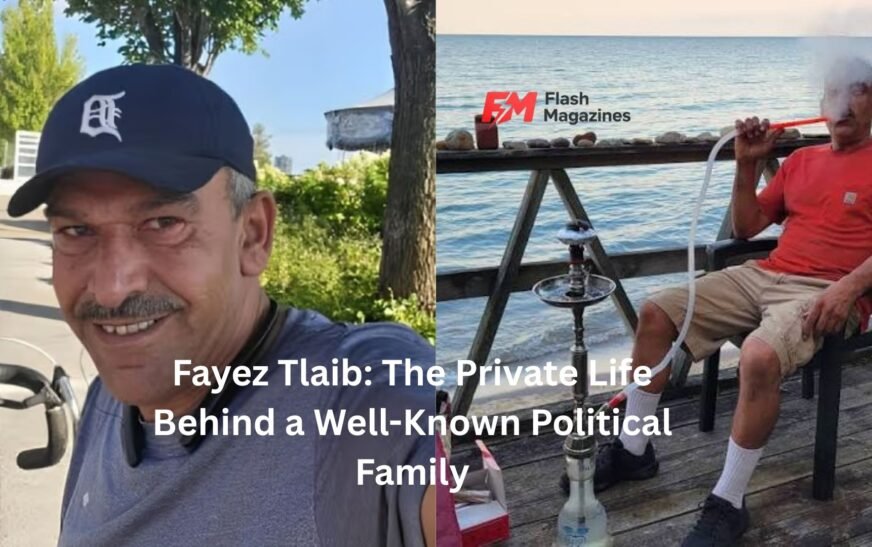
Most people who search for Fayez Tlaib are trying to understand the man connected to one of America’s most recognizable political figures, Congresswoman Rashida Tlaib. Yet the story of Fayez Tlaib isn’t one that unfolds under bright television lights or across social media feeds.
That’s what makes him interesting.
In a world where family members of public figures often become public personalities themselves, Fayez Tlaib has largely remained private. His name appears in discussions about Rashida Tlaib’s personal life, but details about him are relatively limited compared to the attention surrounding his former spouse’s political career.
Sometimes, the people standing just outside the spotlight attract curiosity precisely because they choose not to live inside it.
Table of Contents
- Who Is Fayez Tlaib?
- Early Background and Family Roots
- His Marriage to Rashida Tlaib
- Life During Rashida Tlaib’s Rise in Politics
- Fatherhood and Family Life
- Why Fayez Tlaib Stays Out of the Public Eye
- Public Interest in Fayez Tlaib
- The Challenges of Being Connected to a Public Figure
- What We Know and What Remains Private
- The Lasting Importance of Family Connections
Who Is Fayez Tlaib?
Fayez Tlaib is best known as the former husband of Rashida Tlaib, the U.S. Representative from Michigan and one of the most discussed political figures in recent American politics.
Unlike many people connected to high-profile politicians, Fayez has maintained an extremely low public profile. There are very few interviews, public statements, or media appearances associated with him.
That level of privacy is becoming increasingly rare.
These days, even distant relatives of celebrities and politicians often end up with public social media accounts, interviews, or media coverage. Fayez Tlaib has largely avoided that path.
As a result, public information about his personal life remains limited, which has naturally led many people to become curious about who he is beyond his connection to Rashida Tlaib.
Early Background and Family Roots
Much of Fayez Tlaib’s early life has remained private. Unlike public officials who often publish biographies and career histories, he has not built a public identity around his personal story.
What is generally understood is that he shares a similar cultural and family background connected to the broader Arab-American community that has played a significant role in Michigan, particularly around Detroit and nearby areas.
Michigan has one of the largest Arab-American populations in the United States. Communities there have developed strong family traditions, close social networks, and deep cultural ties across generations.
For many families in these communities, privacy remains an important value.
That context may help explain why relatively little information about Fayez Tlaib has entered public discussion over the years.
His Marriage to Rashida Tlaib
The most widely known aspect of Fayez Tlaib’s public identity is his marriage to Rashida Tlaib.
Their relationship began long before Rashida became a nationally recognized political figure. During those years, life was far different from the intense media attention that would eventually surround her career.
Like many couples, they built a family and navigated everyday responsibilities together.
It’s easy to forget that before political campaigns, congressional hearings, and national interviews, public officials often spend years balancing ordinary family life. School schedules, work commitments, household responsibilities, and parenting concerns tend to occupy far more attention than future political ambitions.
For Fayez and Rashida, those family years formed an important chapter in both of their lives.
Although the marriage eventually ended, their shared history remains a significant part of their personal story.
Life During Rashida Tlaib’s Rise in Politics
Political careers affect entire families.
When someone enters public service, especially at a high level, the attention doesn’t stop with the candidate. Spouses, children, parents, and relatives often find themselves pulled into public conversations whether they want to be or not.
Imagine attending a family gathering and discovering that reporters are interested in your relatives. Imagine seeing personal family matters discussed online by complete strangers.
That kind of experience can be difficult for anyone.
As Rashida Tlaib’s political influence grew, public curiosity about her personal life naturally increased as well. Names connected to her family began appearing in searches, articles, and discussions.
Fayez Tlaib became one of those names.
Yet despite that increased attention, he never embraced a public-facing role. He didn’t become a political commentator. He didn’t seek interviews. He didn’t attempt to build a media presence.
Instead, he largely remained outside the public conversation.
Fatherhood and Family Life
One of the most important parts of Fayez Tlaib’s life appears to be his role as a father.
Parenting often remains meaningful regardless of career paths, political views, or personal circumstances. For many people, family responsibilities become the central focus around which everything else revolves.
Whether it’s helping with homework, attending school events, or simply being present during important milestones, those everyday moments often matter more than public recognition.
Here’s the thing: the internet tends to focus on headlines.
Real life usually happens somewhere else.
For individuals connected to public figures, maintaining a stable family environment can become especially valuable because it provides a sense of normalcy amid public attention.
While details regarding Fayez Tlaib’s private family life remain limited, fatherhood has frequently been mentioned as an important aspect of his identity.
Why Fayez Tlaib Stays Out of the Public Eye
Not everyone wants public attention.
That sounds obvious, but it’s worth remembering.
Modern culture often creates the impression that visibility equals success. Social media rewards sharing. News coverage rewards publicity. Public recognition is frequently treated as something everyone should want.
Many people simply disagree.
Some prefer private careers, private relationships, and private lives. They value personal boundaries and choose not to share every detail with strangers.
Fayez Tlaib appears to fall into that category.
The absence of extensive public information about him may not reflect mystery as much as intentional privacy.
Let’s be honest. There’s something refreshing about that.
In an era where people often document every moment online, choosing privacy can feel surprisingly rare.
Public Interest in Fayez Tlaib
Despite his low profile, searches for Fayez Tlaib continue to appear online.
Why?
The answer is fairly straightforward.
People are naturally interested in the lives of public figures, and that curiosity often extends to spouses, former spouses, children, and family members.
Political figures generate particularly strong interest because their decisions can affect millions of people. Voters often seek a fuller picture of the individuals representing them.
As a result, searches related to family backgrounds become common.
Sometimes people are looking for factual information. Other times they’re simply curious about the personal side of a public figure’s life.
Fayez Tlaib’s connection to Rashida Tlaib places him within that broader pattern of public curiosity.
The Challenges of Being Connected to a Public Figure
Being related to a well-known politician comes with unique challenges.
One challenge is losing a degree of anonymity.
A person who never sought public recognition can suddenly find their name appearing in articles, search engines, and online discussions.
Another challenge involves assumptions.
People may believe they understand someone’s views, experiences, or personal history simply because of their connection to a public figure. Reality is usually more complicated.
Every individual has their own perspectives, experiences, and personal journey.
Consider a simple example. Imagine being introduced at an event not as yourself, but primarily as someone’s former spouse or relative. Over time, that can become frustrating because it reduces a complex individual to a single connection.
Many people associated with public figures face exactly that situation.
What We Know and What Remains Private
One reason Fayez Tlaib continues to attract attention is the balance between public knowledge and private boundaries.
Certain facts are publicly known due to his relationship with Rashida Tlaib. Beyond that, however, many aspects of his life remain largely undisclosed.
There are no widely publicized memoirs.
No extensive interview series.
No ongoing public platform.
As a result, much of the speculation that sometimes appears online lacks substantial verified information behind it.
That’s an important reminder for readers.
When information is limited, it’s often better to acknowledge uncertainty rather than fill gaps with assumptions.
Respect for privacy matters, especially when discussing individuals who have not actively sought public attention.
The Lasting Importance of Family Connections
Family relationships often remain significant long after public attention fades.
Political careers change. News cycles move on. Headlines come and go.
Family history stays.
For Fayez Tlaib, his connection to Rashida Tlaib ensures that public interest will likely continue, particularly among people seeking to understand the broader story surrounding one of America’s most prominent political figures.
Yet his story also highlights something larger.
Not everyone connected to fame wants fame.
Some people choose quieter paths. They focus on family, personal responsibilities, and life away from cameras. Their influence may never generate headlines, but that doesn’t make it less meaningful.
In many ways, Fayez Tlaib represents that quieter side of public life—a person known because of a famous connection while still maintaining a strong sense of personal privacy.
And perhaps that’s the biggest takeaway. Even in a world fascinated by visibility, there is still value in keeping some parts of life your own.