
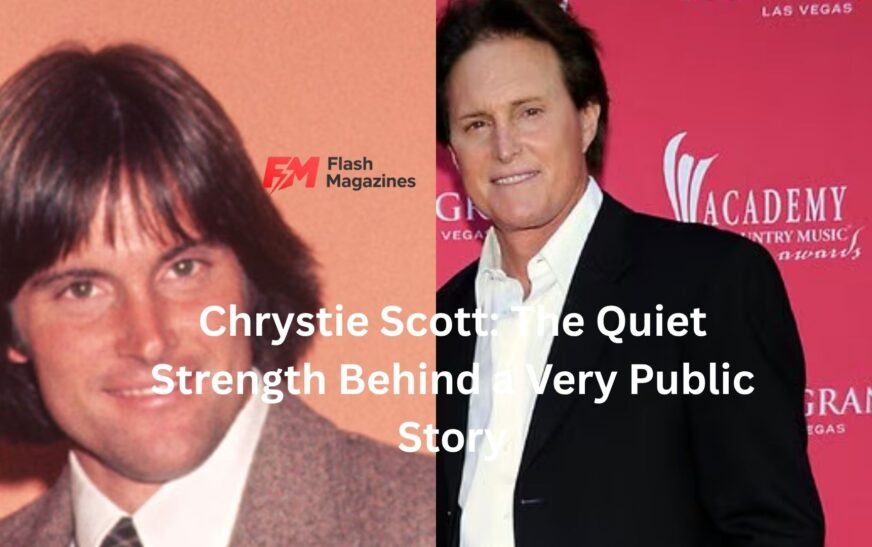
Most people first hear the name Chrystie Scott while reading about Caitlyn Jenner. That’s understandable. Their lives were connected during one of the most intense periods imaginable: Olympic pressure, sudden fame, marriage, family life, and deeply personal struggles happening behind closed doors.
But here’s the thing. Chrystie Scott’s story stands on its own.
She never chased celebrity status. She wasn’t building a personal brand or trying to turn private moments into headlines. In a culture where people often become famous simply for being near famous people, Scott mostly stepped away from the spotlight. That decision alone makes her interesting.
For decades, she’s been remembered as Caitlyn Jenner’s first wife, yet the more you look into her life, the more you realize she represented something steadier. Loyalty. Patience. Quiet resilience. The kind that rarely trends online but matters a lot in real life.
Long before reality TV and headlines
Chrystie Scott, born Chrystie Crownover, met Bruce Jenner back in the early 1970s while both attended college in Iowa. At the time, Jenner wasn’t yet a global sports icon. He was a talented athlete trying to figure things out after a football injury shifted his direction toward track and field.
That period matters because it completely changes the image people often have today.
There were no Kardashian cameras. No endless interviews. No luxury empire. Just two young people trying to build a life together while one of them trained for one of the hardest events in sports: the decathlon.
And let’s be honest, Olympic dreams sound romantic until you imagine the actual daily reality.
Training takes over everything. Money gets tight. Schedules become brutal. Relationships bend under pressure. Someone usually has to hold normal life together while the athlete chases greatness.
By most accounts, that person was Chrystie Scott.
She reportedly worked as a flight attendant during those years, helping support the household financially while Jenner trained full-time.
That detail says a lot. It’s easy to celebrate the athlete standing on the podium. People rarely notice the partner paying bills, managing stress, and absorbing uncertainty in the background.
The 1976 Olympics changed everything
When Bruce Jenner won gold at the 1976 Montreal Olympics, life changed overnight.
One day you’re living relatively privately. The next, cameras follow you everywhere.
That kind of fame can reshape relationships fast. Some couples grow stronger. Others crack under the pressure. Most probably do both at different times.
Scott suddenly found herself attached to one of the most recognizable athletes in America. Jenner became a national symbol almost instantly. Endorsements, interviews, television appearances, and public attention followed.
What’s interesting is that Chrystie Scott never seemed particularly interested in becoming a celebrity herself.
She appeared occasionally in television projects, including the 1977 film SST: Death Flight, where she was credited as Chrystie Jenner. But her public profile stayed relatively small compared to the circus forming around her husband.
That restraint feels unusual now.
Today, proximity to fame often becomes its own career path. Back then, Scott appeared more focused on building a family than building attention.
A marriage carrying private weight
One of the most discussed parts of Chrystie Scott’s story emerged many years later.
Scott has said that Jenner spoke to her early in their marriage about struggles related to gender identity. According to multiple reports, she was among the first people Jenner confided in long before the public transition decades later.
Think about the emotional complexity of that for a second.
This was the 1970s. Conversations around gender identity were nowhere near as open or understood as they are today. There wasn’t widespread language for it. There weren’t public roadmaps. Most people had no framework at all for discussing those feelings honestly.
So imagine being a young married couple carrying that kind of deeply personal conversation while also navigating Olympic fame and public expectations.
That doesn’t automatically make anyone a hero or villain. It just makes the situation deeply human.
Relationships are already complicated without global attention attached to them.
Scott later described trying to understand what Jenner was experiencing while also dealing with the realities of marriage and family life. And honestly, that part of the story tends to get overlooked because people prefer cleaner narratives. Real life usually isn’t clean.
Sometimes people love each other deeply and still can’t make a marriage work.
Motherhood became the center of her life
During their marriage, Scott and Jenner had two children: Burt and Casey.
By nearly every account, motherhood became one of the defining parts of her life after the marriage ended.
And here’s where her story starts feeling especially relatable.
A lot of people go through divorces connected to major identity shifts, career changes, or emotional distance. Most just don’t do it under public scrutiny.
Scott and Jenner divorced in the early 1980s. Instead of leaning into public drama, Scott largely stepped away from media attention afterward.
That choice probably preserved some stability for her children too.
It’s easy to underestimate how valuable privacy can be. Especially during emotionally messy years.
You can almost picture the contrast. Outside the house: magazine covers, reporters, growing fame. Inside the house: school schedules, parenting responsibilities, normal family concerns.
Real life tends to continue no matter how famous somebody becomes.
Why people still talk about Chrystie Scott
Part of the reason interest in Chrystie Scott never fully disappeared is because she represents a version of fame-adjacent life that feels rare now.
She didn’t try to monetize every chapter of her experience.
She rarely gave interviews.
She stayed mostly private even when public curiosity exploded again after Caitlyn Jenner’s transition became worldwide news in 2015.
And surprisingly, when she did speak publicly, her tone wasn’t bitter.
That caught people off guard.
Modern celebrity culture trains us to expect revenge memoirs, public feuds, or nonstop commentary. Scott largely avoided all of that. Instead, she often sounded reflective and compassionate, even while acknowledging how difficult certain periods had been.
That doesn’t mean everything was easy. It probably means she learned how complicated human relationships really are.
There’s a maturity in that perspective that resonates with people, especially readers who’ve lived through long relationships themselves.
The strange burden of being “the first wife”
There’s also something worth mentioning about how history labels women connected to famous men.
People become reduced to titles.
“The first wife.”
“The ex-wife.”
“The former partner.”
It flattens an entire life into one relationship category.
Chrystie Scott’s life clearly included much more than that. She worked. Raised children. Built a second marriage. Lived through cultural shifts most people can barely imagine.
Still, public memory often compresses women into supporting roles.
That’s partly why her story remains compelling. Readers sense there’s more beneath the label.
And honestly, there usually is.
Privacy became part of her identity
One detail that keeps surfacing in discussions about Scott is how intentionally private she remained over the years.
No constant media appearances.
No major reality television presence.
No public oversharing.
That almost feels radical today.
We live in a time where many people document breakfast, arguments, vacations, workouts, and heartbreak in real time. Scott took the opposite path. She protected her personal space fiercely.
There’s something refreshing about that.
It reminds you that not everybody wants visibility. Some people genuinely prefer ordinary life, even after touching extraordinary circumstances.
That choice may also explain why people remain curious about her. Mystery tends to survive longer than overexposure.
Her role in the larger Jenner story
It’s impossible to discuss Chrystie Scott without acknowledging her place in the broader Jenner family story.
She was there before the global fame machine fully formed. Before reality television transformed the family into a cultural phenomenon. Before endless online analysis turned every personal detail into content.
In many ways, she witnessed the earliest version of a story that later became worldwide entertainment.
That perspective gives her unique historical importance, even if she never actively sought it.
And unlike many people pulled into celebrity orbit, she appears to have maintained a grounded sense of self outside public attention.
That’s harder than it sounds.
Fame changes social dynamics. It changes friendships. It changes trust. Sometimes it changes identity itself. Watching someone stay relatively steady through all that is interesting because it goes against what we usually expect.
What makes Chrystie Scott relatable
At the core of it, people connect with Chrystie Scott because her story touches on experiences that feel familiar, even if the celebrity setting doesn’t.
Supporting a partner’s ambition.
Trying to understand someone you love.
Raising children after divorce.
Navigating private pain quietly.
Choosing peace over publicity.
Those themes land because they’re real.
You don’t need Olympic medals or magazine covers to understand emotional complexity. Most adults eventually experience some version of it.
And maybe that’s why Scott still draws attention decades later. Not because she chased fame, but because she handled difficult situations in a way that feels recognizably human.
Final thoughts
Chrystie Scott never became the loudest person in the room. In many ways, that’s exactly what makes her memorable.
She lived through extraordinary moments without turning herself into a spectacle. She supported ambition, navigated personal upheaval, raised a family, and then mostly stepped back from public life.
There’s dignity in that.
In a world obsessed with visibility, her quieter approach stands out more than ever. And maybe that’s the real reason people continue searching for her story. Not because she demanded attention, but because she never really did.