

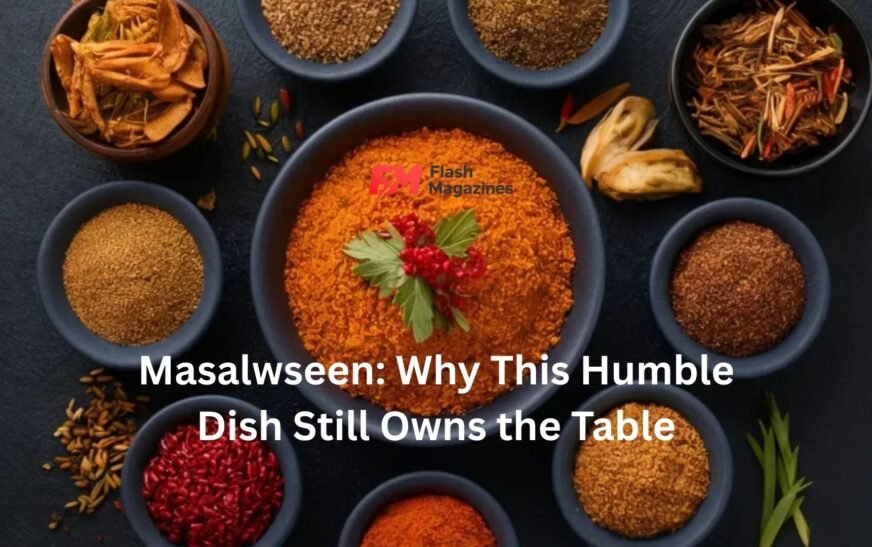
There’s something about masalwseen that sticks with you. Not in a loud, flashy way—but quietly, the way certain smells or childhood meals do. You might not crave it every day, but when you do, nothing else quite scratches the same itch.
If you’ve ever sat down to a plate of it—steaming, fragrant, just a little messy—you already get it. And if you haven’t, well, it’s one of those dishes that doesn’t try to impress… yet somehow always does.
Let’s talk about why.
The comfort factor you can’t fake
Masalwseen isn’t the kind of food you plate with tweezers. It’s not delicate. It’s not minimal. It’s generous. Full. Honest.
And that’s exactly the point.
There’s a comfort in food that comes from familiarity, from layers of flavor that don’t feel engineered but rather built over time. Masalwseen delivers that in a way few dishes do. The combination of spices, the warmth, the slightly tangled textures—it all works together like something that evolved in real kitchens, not test labs.
Think about a long day. You’re tired, a little distracted, not in the mood for anything complicated. A bowl of masalwseen lands in front of you. Suddenly, things slow down. You eat without overthinking. That’s not accidental—that’s what this kind of dish is built for.
It’s simple—but not basic
Here’s the thing: masalwseen looks simple at first glance. And technically, it is. The ingredients aren’t rare. The preparation isn’t overly complicated.
But simple doesn’t mean basic.
There’s a difference between throwing ingredients together and actually understanding how they interact. The spices in masalwseen aren’t just there for heat or color—they create depth. One note alone wouldn’t do much. Together, they build something layered, something that changes slightly with every bite.
A good version has balance. Not too heavy, not too flat. You can taste the individual components, but they don’t fight each other.
It’s like a conversation where everyone knows when to speak—and when to stay quiet.
The texture does half the work
People don’t talk about texture enough, but with masalwseen, it’s a big part of the experience.
You’ve got softness, maybe a bit of chew, sometimes a slight crisp edge depending on how it’s made. That variation keeps things interesting. Every forkful feels just a little different from the last.
And that matters more than you’d think.
Ever eaten something where the flavor was good, but halfway through you got bored? That’s usually a texture problem. Masalwseen avoids that trap. It gives your mouth something to do.
It’s subtle, but it works.
A dish that adapts without losing itself
One of the reasons masalwseen has stuck around is flexibility. It’s not rigid. It doesn’t demand perfection.
Different homes make it differently. Some lean heavier on spices. Others keep it milder. Some add extra ingredients, others keep it stripped down. And somehow, it still feels like the same dish.
That’s not easy to pull off.
There’s a core identity that holds everything together, even when the details shift. It’s like hearing different versions of the same song—you recognize it instantly, even when the arrangement changes.
That kind of adaptability is what keeps a dish alive across generations.
The quiet skill behind a good plate
Let’s be honest—anyone can make masalwseen. However, not everyone is able to do it successfully.
There’s a difference.
It shows up in small things. How the spices are layered. When the heat is adjusted. Whether the texture comes out just right or slightly off. These aren’t dramatic steps, but they add up.
You can tell when someone’s rushed it. The flavors feel disconnected. The texture isn’t quite there. It’s still edible—maybe even good—but it doesn’t have that pull.
Now compare that to a version made with attention. Same ingredients, same basic method—but it lands differently. It feels complete.
That’s the quiet skill. Not flashy, but unmistakable.
Why it keeps showing up in everyday life
Masalwseen isn’t reserved for special occasions. It’s not something you wait months to eat. It shows up in regular life—in kitchens where people are just trying to make something satisfying without overthinking it.
And that’s part of its strength.
It fits into real schedules. You don’t need a perfect setup or hours of prep. You just need a bit of time and a sense of rhythm.
Picture a weeknight. Nothing special going on. Someone decides to make masalwseen. The smell fills the space. People drift into the kitchen, not because they were called, but because it pulls them in.
That’s not marketing. That’s instinct.
The flavor memory effect
Some foods hit you immediately. Others grow on you. Masalwseen tends to do both.
The first bite is warm, satisfying, easy to like. But what really makes it stick is what happens later. Hours after eating, you still remember it. Not in a loud way, but in the background.
You might not even realize it at first. Then the next day, you catch yourself thinking about it again.
That’s flavor memory. And it’s powerful.
It’s why people come back to certain dishes over and over—not because they’re trendy, but because they leave an impression that lasts.
It doesn’t try too hard—and that’s the point
There’s a lot of food out there trying to stand out. Extreme flavors, unusual combinations, dramatic presentation.
Masalwseen doesn’t play that game.
It’s grounded. It knows what it is. It doesn’t need to prove anything.
And oddly enough, that confidence makes it more appealing.
When something isn’t trying too hard, you relax around it. You don’t feel like you need to analyze every bite or compare it to something else. You just eat.
That simplicity creates space for enjoyment.
Small details that make a big difference
If you’ve ever made masalwseen yourself, you know the little decisions matter.
How long you let things cook. When you add certain ingredients. Whether you taste as you go or just follow a routine.
Even something as small as adjusting the spice level at the end can change the whole experience.
It’s not about being precise—it’s about being present.
Someone who pays attention while cooking masalwseen ends up with something noticeably better than someone who doesn’t. Not because they’re more talented, but because they’re engaged.
And you can taste that.
It brings people together without forcing it
Some meals are designed to impress guests. Others are meant for sharing in a more relaxed way.
Masalwseen falls into the second category.
It doesn’t create pressure. No one’s worried about etiquette or presentation. People just gather, serve themselves, and eat.
Conversation flows more easily around food like this. There’s less focus on the meal as an event and more on the moment itself.
You’ve probably seen it before—a table where everyone starts talking a little louder, laughing a little more, staying a little longer than planned.
That’s not a coincidence.
Why it still matters
In a world where food trends change fast, dishes like masalwseen hold their ground.
They don’t rely on novelty. They rely on consistency, on the kind of satisfaction that doesn’t fade after a few tries.
That’s rare.
It reminds us that good food doesn’t need to be complicated or new. Sometimes it just needs to be real—made with attention, shared without fuss, and enjoyed without overthinking.
And honestly, that’s something worth holding onto.
The takeaway
Masalwseen isn’t trying to be the best dish in the world. It’s not aiming for perfection or attention.
It just works.
It feeds people well. It fits into real life. It leaves an impression without demanding one.
And that’s exactly why it keeps showing up, year after year, table after table.
Not everything needs to be reinvented. Some things just need to be made—and appreciated—for what they already are.