
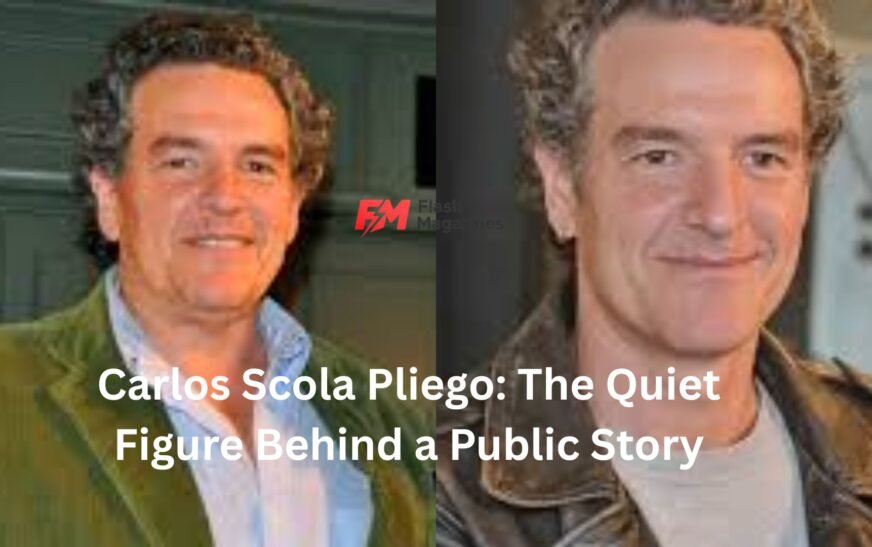
There’s something intriguing about people who stay just outside the spotlight, even when their lives brush up against it. Carlos Scola Pliego is one of those figures. His name tends to surface in conversations about fame, relationships, and the spaces in between, but he’s never been the type to chase attention.
That alone makes people curious.
Who is he really? What did he do before the headlines? And why does his story still linger, even years after it first caught public attention?
Let’s unpack it in a way that feels real, not recycled.
A Life That Didn’t Start in the Spotlight
Carlos Scola Pliego wasn’t born into celebrity culture. He built his life in the film and creative industries, working behind the scenes rather than in front of the camera.
That matters.
Because people who work behind the scenes tend to think differently. They’re observers. They notice details others miss. They don’t necessarily want applause. They want the work to speak.
If you’ve ever worked on a creative project where you weren’t the face of it—maybe editing a video, writing something anonymously, or helping someone else shine—you’ll get the mindset. It’s not about visibility. It’s about contribution.
That’s the world he came from.
The Relationship That Put Him on the Map
Most people know Carlos Scola Pliego because of his relationship with Sade Adu, the iconic singer behind timeless tracks like Smooth Operator and No Ordinary Love.
Their relationship wasn’t flashy. It didn’t play out in tabloids the way celebrity romances often do today. In fact, it felt almost private to a fault.
And yet, it drew attention.
Why? Because Sade herself has always been a bit of a mystery. She’s not constantly in the media. She doesn’t overshare. So naturally, people become curious about the people in her life.
Carlos became part of that curiosity.
They were married for a period of time, and while the relationship eventually ended, it left a mark—not in a dramatic, headline-grabbing way, but in a quieter, more human way.
Privacy in a World That Doesn’t Respect It
Here’s the thing. Being connected to a globally recognized artist changes how the world sees you, even if you didn’t ask for it.
Suddenly, people want details.
They want timelines, reasons, backstories. They want to fill in gaps, even when those gaps exist for a reason.
Carlos Scola Pliego never leaned into that attention. He didn’t turn interviews into opportunities to explain himself. He didn’t build a public persona around the relationship.
That choice says a lot.
It’s actually harder to stay quiet than it is to speak up when people are watching. Silence takes discipline. It also suggests a certain level of self-awareness—knowing that not everything needs to be shared.
Think about it in everyday terms. Imagine going through a breakup and having everyone you know ask for details. Now multiply that by thousands—or millions—of strangers.
Most people would feel pressure to say something.
He didn’t.
The Work That Defined Him (Even If It Stayed Low-Key)
Carlos Scola Pliego worked within the film world, particularly in roles that supported the creative process rather than dominated it.
These are the kinds of roles that rarely get headlines but are absolutely essential.
If you’ve ever watched a film and thought, “That felt seamless,” chances are someone like Carlos was involved somewhere behind the curtain. The pacing, the structure, the subtle decisions that shape the final product—they don’t happen by accident.
People in these roles often prefer it that way. They’re not chasing recognition. They’re focused on getting things right.
There’s something refreshing about that, especially now when visibility often feels like the main currency.
A Relationship That Stayed Human
Let’s be honest. Not every relationship tied to fame turns into a spectacle. Some stay grounded, even when the people involved are anything but ordinary.
From what’s known publicly, the relationship between Carlos Scola Pliego and Sade wasn’t defined by chaos or constant attention. It felt… normal.
Or as normal as things can be when one partner is an international music icon.
That contrast is interesting. One person deeply embedded in global fame. The other rooted in a quieter, more behind-the-scenes world.
It’s the kind of pairing that can either balance out beautifully or create distance over time.
And like many relationships, theirs eventually came to an end.
Life After the Spotlight
What stands out most about Carlos Scola Pliego is what happened after.
Or rather, what didn’t happen.
He didn’t reinvent himself as a public figure. He didn’t write tell-all accounts or step into media narratives. He stepped back.
That’s rare.
We’re used to people extending their moment in the spotlight, stretching it out as far as possible. Even a brief connection to fame can turn into a long-term public identity.
He chose a different path.
And there’s something quietly powerful in that decision.
It suggests that his sense of self wasn’t tied to public recognition. That he had a life, an identity, and a purpose that existed independently of who he was married to.
Why People Are Still Curious
Despite the lack of public exposure, people still search for Carlos Scola Pliego.
That curiosity says less about him and more about how we process fame.
We’re drawn to the edges of celebrity stories—the parts that aren’t fully explained. The people who were there but didn’t say much. The relationships that didn’t unfold in public.
There’s a sense that those stories might be more real.
And in many cases, they are.
When something isn’t constantly documented, it leaves room for imagination. It also leaves room for authenticity, because not every moment is shaped for an audience.
The Value of Staying Private
In a time where sharing everything feels like the default, Carlos Scola Pliego represents something different.
Restraint.
Not the forced kind. The intentional kind.
He reminds us that you don’t have to explain every chapter of your life for it to be meaningful. That not every experience needs to be turned into content. That sometimes, the most grounded choice is to keep things personal.
It’s a simple idea, but not an easy one to follow.
Try it yourself. Next time something significant happens in your life, resist the urge to share it immediately. Sit with it. Let it belong to you first.
That’s the kind of approach his story reflects.
A Quiet Legacy
Carlos Scola Pliego may not have a long list of public achievements that people can easily point to. He’s not a household name. He doesn’t dominate headlines.
But his story still matters.
Not because of fame, but because of how he handled it.
He moved through a world that often pulls people into the spotlight and chose not to stay there. He was part of a widely recognized relationship and didn’t turn it into a lifelong identity.
That’s not something you see every day.
Final Thoughts
Some people leave a mark by being loud, visible, and impossible to ignore. Others do it by staying grounded, even when circumstances could have pushed them in a different direction.
Carlos Scola Pliego falls into the second group.
His story isn’t about fame. It’s about proximity to it—and the choice not to be defined by it.
And honestly, that might be more interesting than the spotlight itself.