
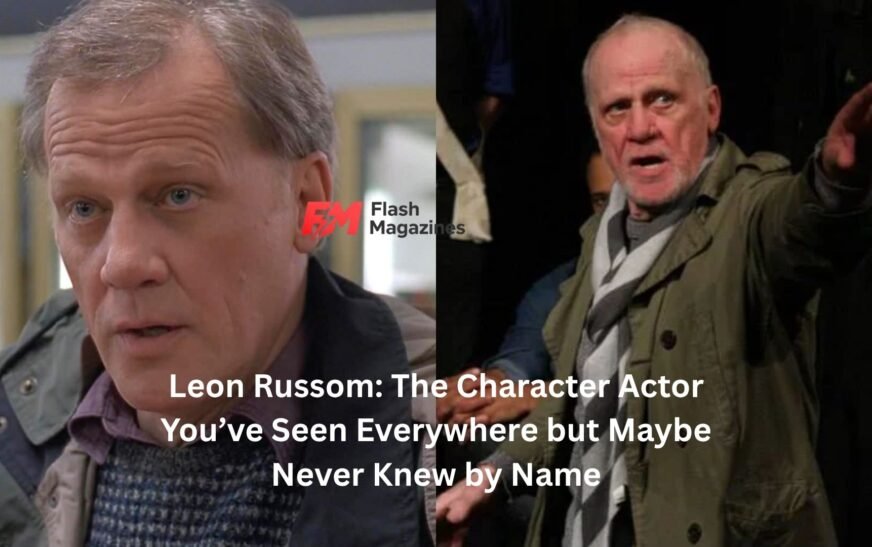
Some actors become household names. Others become part of the fabric of television and film without ever chasing celebrity status. Leon Russom belonged to that second group.
If you watched American TV anytime from the 1970s through the 2010s, chances are you saw him. Maybe he was a stern sheriff, a military official, a troubled father, or the kind of guy who walked into a scene and instantly made it feel more believable. He had one of those faces audiences trusted, even when the character himself couldn’t always be trusted.
That’s what made Leon Russom memorable. He didn’t perform at the audience. He grounded every scene in something real.
And honestly, character actors like him often leave a deeper impression than the stars whose names appear in giant letters on movie posters.
Leon Russom’s Early Life and Quiet Start
Leon Russom was born on December 6, 1941, in Little Rock, Arkansas. His background wasn’t flashy, and neither was the path he took into acting. There’s something fitting about that when you look at the career he eventually built.
He studied theater and slowly worked his way into television during a period when TV dramas were exploding in popularity. Back then, actors had to earn opportunities episode by episode. There was no social media boost. No instant fame machine. You showed up, delivered, and hoped producers remembered your name.
Russom did exactly that.
By the 1970s, he was appearing regularly on television. And not just in random bit parts either. Casting directors clearly trusted him with characters carrying emotional weight or authority.
You can usually tell when an actor becomes “industry reliable.” They start showing up across every major network series because producers know they’ll deliver without drama. Russom became that kind of actor.
The Face of Classic Television
There’s a certain generation of actors who practically built American television from the inside out. Leon Russom was one of them.
His résumé is massive. Seriously massive.
He appeared in shows like The A-Team, Matlock, Murder, She Wrote, The X-Files, Walker, Texas Ranger, NYPD Blue, Prison Break, and Star Trek: Deep Space Nine. That’s only scratching the surface.
What stands out isn’t just the number of appearances. It’s the consistency.
Even in small roles, Russom brought a kind of lived-in realism. He never looked like an actor trying to “play” authority figures. He looked like people you’ve actually met. A tired police chief. A no-nonsense military officer. A man carrying years of regret.
That matters more than many viewers realize.
Think about a crime drama. If every supporting actor feels fake, the whole episode falls apart. Russom had the opposite effect. He made fictional worlds feel stable.
There’s a reason casting directors kept calling him back for decades.
Why Character Actors Matter More Than People Think
Here’s the thing about Hollywood: leading actors often get the spotlight, but character actors create the atmosphere.
Leon Russom understood this instinctively.
You might not remember every line he delivered, but you remember the feeling he brought into scenes. Calm authority. Quiet tension. Sometimes sadness without overplaying it.
A good character actor doesn’t distract from the story. They deepen it.
There’s a moment many viewers remember from older TV dramas where a secondary character appears for maybe four minutes yet somehow feels completely real. That’s a skill. It’s not accidental.
Russom had that skill.
And unlike actors who rely heavily on charisma or flashy performances, he used restraint. Modern audiences sometimes overlook how difficult restraint actually is. Anyone can yell dramatically. Staying believable while doing very little? Much harder.
His Role in True Grit
One of Leon Russom’s notable film appearances came in the 2010 remake of True Grit, directed by Joel and Ethan Coen.
He played the sheriff in the film, and even though it wasn’t a massive role, it fit him perfectly. The Coen brothers are known for casting actors with strong presence, even in brief scenes. Russom had exactly the kind of grounded authenticity they tend to value.
That movie introduced him to younger audiences who may not have recognized his face from decades of television work.
And honestly, seeing veteran actors pop up in modern films can feel strangely comforting. There’s history in their performances. They carry decades of experience into even small moments.
Russom had that quality naturally.
Leon Russom and Star Trek
Science fiction fans especially remember Leon Russom for his connection to the Star Trek universe.
He appeared in Star Trek: Deep Space Nine as Admiral Toddman, bringing his trademark authority and seriousness to the role. Longtime Trek viewers appreciated actors like Russom because they made futuristic worlds feel politically believable.
That sounds oddly specific, but it matters.
Science fiction collapses quickly when supporting performances feel weak. Russom approached those roles like real people with responsibilities rather than exaggerated genre characters.
Interestingly, he also appeared in the original Star Trek series years earlier in a completely different role. Few actors can say they participated in both the classic era and the later expansions of the franchise.
For Trek fans, that creates a kind of legacy connection.
A Career Built on Reliability
Hollywood changes constantly. Trends come and go. Entire genres disappear and return again.
Leon Russom stayed working through all of it.
That alone says a lot.
Actors with 40-year careers usually share one important trait: reliability. Directors know they’ll show up prepared. Producers know they won’t create chaos. Fellow actors know scenes will work better with them involved.
The entertainment industry is smaller than people think. Reputations travel fast.
Russom’s long career suggests he earned serious professional respect behind the scenes.
And there’s something admirable about that kind of success. Not everyone needs to dominate headlines to build meaningful work.
Sometimes consistency is the achievement.
The Emotional Weight He Brought to Screen
One thing that separated Leon Russom from interchangeable TV actors was emotional texture.
Even when playing authority figures, he often hinted at exhaustion, disappointment, or internal conflict. Tiny facial expressions. A pause before speaking. Slight shifts in tone.
Those details matter.
Take older procedural dramas as an example. A lesser actor might treat a police captain role like generic exposition delivery. Russom usually found something human underneath it.
Maybe the character had seen too much. Maybe he was trying to hold things together. Maybe he already knew the situation wouldn’t end well.
That subtle emotional layering gave scenes more depth without drawing attention to itself.
A lot of viewers feel performances emotionally before they consciously notice them. Russom understood that rhythm.
Working Across Different Eras of Television
It’s easy to forget how dramatically television evolved during Leon Russom’s career.
He worked through the network TV era, cable expansion, prestige drama growth, and eventually streaming-era storytelling styles.
That’s a huge transition.
Acting styles changed too. Television performances from the 1970s often felt more theatrical compared to the quieter realism audiences expect today. Russom adapted across decades without seeming outdated.
Not every actor manages that.
Some performers become trapped in the style of the era that made them famous. Russom stayed flexible. He adjusted naturally while keeping the grounded presence that defined his work.
That adaptability helped him remain relevant far longer than many of his contemporaries.
Why Audiences Connected With Him
Leon Russom wasn’t flashy. That’s probably part of why people trusted him onscreen.
He looked like someone who belonged in real environments. You could imagine meeting one of his characters in a courthouse hallway, a sheriff’s office, or a small-town diner.
There’s a strange comfort in actors who feel authentic instead of manufactured.
Modern entertainment sometimes leans heavily on hyper-polished performances where everyone appears impossibly stylish and self-aware. Russom came from a different tradition. His work felt practical. Human.
And viewers notice that, even subconsciously.
People connect with familiarity.
His Legacy After His Passing
Leon Russom passed away on October 6, 2022, at the age of 80.
For casual viewers, the news may have triggered that immediate reaction: “Wait, I know that guy from somewhere.”
That’s actually a remarkable legacy.
Not every actor becomes globally famous, but many become deeply woven into cultural memory through repetition and consistency. Russom’s face lived across decades of American television history.
When audiences revisit old episodes of The X-Files or Matlock or Star Trek, they’ll continue seeing him appear unexpectedly, reminding viewers of a generation of actors who helped define television storytelling.
There’s lasting value in that kind of career.
The Importance of Actors Like Leon Russom
Hollywood often celebrates transformation and spectacle. But actors like Leon Russom remind us that stability matters too.
He represented a disappearing kind of performer: the dependable working actor whose goal wasn’t fame but believable storytelling.
And honestly, many of the best TV shows ever made depended on people exactly like him.
Think about your favorite drama series. The leads matter, sure. But so do the judges, captains, fathers, politicians, doctors, and worn-down authority figures surrounding them. Those characters shape the emotional world of the story.
Russom excelled at that craft.
He gave scenes credibility.
That may sound simple, but it’s incredibly rare.
Final Thoughts on Leon Russom
Leon Russom built the kind of acting career many performers quietly dream about: long-lasting, respected, and deeply connected to the craft itself.
He wasn’t chasing viral fame before viral fame existed. He simply kept working, year after year, bringing realism to every role he touched.
And viewers benefited from that dedication more than they probably realized at the time.
The next time you revisit an older television series and suddenly recognize his face, it’s worth pausing for a second. Not because he demanded attention, but because he earned it steadily over decades.
That’s the beauty of great character acting. It sneaks up on you.
Leon Russom may never have been the biggest star in the room, but he helped make countless stories believable. In television and film, that’s a legacy that lasts much longer than hype.