

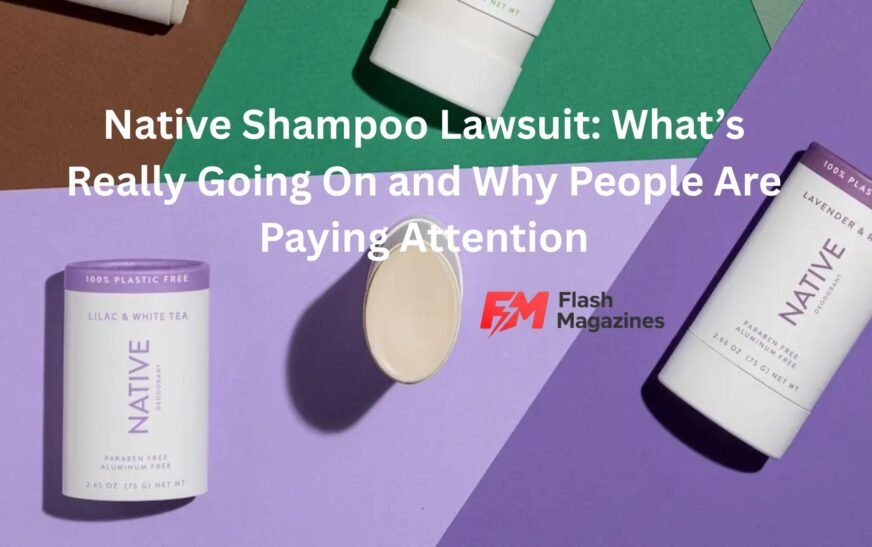
If you’ve ever stood in the shampoo aisle staring at a bottle labeled “natural,” “clean,” or “safe,” you’ve probably come across Native. The brand built its reputation on simplicity—fewer ingredients, no harsh chemicals, and a kind of back-to-basics appeal that feels reassuring in a crowded market.
So when talk of a Native shampoo lawsuit started circulating, it caught people off guard.
Because let’s be honest—when a brand positions itself as the safer choice, any legal trouble feels like a bigger deal. It raises questions not just about one product, but about the whole idea of “clean” personal care.
Where the Lawsuit Talk Comes From
Lawsuits involving consumer products don’t always mean something dramatic or dangerous is happening. Sometimes, they revolve around labeling. Sometimes it’s marketing language. Sometimes it’s about ingredient transparency.
That seems to be the case here.
The concerns tied to Native shampoo lawsuits generally center around claims that the brand’s marketing may not fully align with what’s actually in the bottle. In particular, some consumers and legal complaints have questioned whether terms like “natural” or “safe” create expectations that aren’t entirely accurate.
Now, here’s the thing—“natural” isn’t a tightly regulated word in the cosmetics industry. Unlike food labels, where definitions can be strict, personal care products live in a bit of a gray zone. Brands can use the word in ways that feel intuitive to them, but not necessarily precise to a scientist.
That gap? It’s where lawsuits often begin.
Why “Natural” Can Be Misleading (Even When It’s Not Intentional)
Picture this: you grab a shampoo that says “naturally derived ingredients.” You assume it’s free from anything synthetic. Maybe even safer for sensitive skin.
But flip the bottle over, and you might still see preservatives, fragrance blends, or processing agents that don’t quite match that mental image.
That doesn’t automatically make the product unsafe. Not at all. Many synthetic or processed ingredients are there for good reasons—stability, shelf life, effectiveness.
Still, it can feel like a disconnect.
And when enough consumers feel that disconnect, it can turn into legal action based on perceived misleading claims.
This isn’t unique to Native. The entire personal care industry has been navigating this tension for years. But because Native built its brand so heavily around simplicity and transparency, the expectations are higher.
What People Are Actually Worried About
If you read through discussions online, the concern isn’t usually panic-level fear. It’s more subtle than that.
People are asking questions like:
- “Is this really as clean as it sounds?”
- “Am I paying extra for marketing?”
- “Should I switch to something else?”
That kind of uncertainty matters.
It’s the difference between trusting a brand without thinking twice and suddenly reading every label a little more carefully.
And honestly, that shift in behavior might be the biggest impact of any lawsuit—more than the legal outcome itself.
A Quick Reality Check on Ingredient Safety
Let’s ground this for a second.
Just because a product is involved in a lawsuit doesn’t mean it’s harmful or dangerous. Legal claims often hinge on wording, perception, or consumer expectations—not necessarily toxicity.
For example, an ingredient might sound chemical-heavy but be widely accepted as safe in cosmetic use. On the flip side, something “natural” like essential oils can irritate sensitive skin.
So the natural vs. synthetic debate isn’t as clean-cut as marketing sometimes suggests.
That’s why dermatologists often focus less on labels like “natural” and more on how your skin actually reacts.
If a shampoo works for you—no irritation, no dryness, no weird scalp issues—that’s a strong signal in itself.
How Situations Like This Affect Brand Trust
Here’s where things get interesting.
Trust is fragile in the personal care space.
You’re not just buying a product—you’re putting it on your body, often daily. That creates a more personal relationship than, say, buying a pair of socks.
So when legal questions pop up, even if they’re minor, they can shake that trust.
Some people will shrug it off and keep using the product. Others will immediately start looking for alternatives. And a third group—the biggest one, probably—just becomes more cautious.
They don’t necessarily leave. But they pay closer attention.
That’s a subtle but powerful shift.
What You Can Do as a Consumer
You don’t need a chemistry degree to make smart choices here. But a little awareness goes a long way.
Start with the basics.
If a product claims to be “natural,” take a quick look at the ingredient list. You don’t need to understand every word—just notice the overall mix. A few unfamiliar terms are normal. A long list of complex compounds might not match the brand’s messaging.
Also, think about your own priorities.
Some people care most about avoiding certain preservatives. Others focus on fragrance. Some just want something that doesn’t irritate their scalp.
There’s no single “right” standard.
A friend of mine switched to a “clean” shampoo after seeing online debates like this. Within a week, her scalp was dry and itchy. She went back to her old brand—less trendy, more reliable for her—and the problem disappeared.
That’s a useful reminder: your experience matters more than marketing language.
The Bigger Pattern Behind These Lawsuits
If you zoom out, the Native shampoo lawsuit is part of a much larger pattern.
Consumers are getting more informed. More skeptical. More willing to question what brands say.
And companies are walking a tightrope—trying to communicate clearly without oversimplifying or overpromising.
That’s not easy.
Words like “clean,” “green,” and “natural” are powerful, but they’re also vague. They mean different things to different people. And when expectations don’t line up, legal challenges can follow.
You’ll likely see more of these cases across the industry, not fewer.
Should You Stop Using Native Shampoo?
This is probably the question sitting in the back of your mind.
And the honest answer is: it depends.
If you’ve been using Native shampoo and it works well for you—no irritation, no issues—there’s no immediate reason to panic.
If the lawsuit or concerns make you uncomfortable, it’s reasonable to explore alternatives. There are plenty of brands out there with different formulations and philosophies.
But don’t feel pressured to switch based solely on headlines.
Headlines tend to amplify uncertainty. Your actual experience with a product is a more grounded guide.
How to Read Between the Lines Going Forward
Situations like this are a good reminder to look beyond front-label claims.
Turn the bottle around. Scan the ingredients. Notice how the product feels over time—not just after one wash, but after a few weeks.
Pay attention to your scalp and hair. Are they balanced? Dry? Oily? Irritated?
Those signals are more reliable than buzzwords.
And when you see terms like “natural,” treat them as a starting point—not a guarantee.
The Takeaway
The Native shampoo lawsuit isn’t really about one brand—it’s about expectations.
It highlights the gap between how products are marketed and how consumers interpret those messages. And it shows how quickly trust can be questioned when that gap becomes visible.
You don’t need to overreact. But it’s worth staying aware.
Choose products that work for you. Stay curious about what’s in them. And don’t let a single word on a label do all the thinking for you.
That’s a much stronger position than blindly trusting—or instantly rejecting—any brand.