
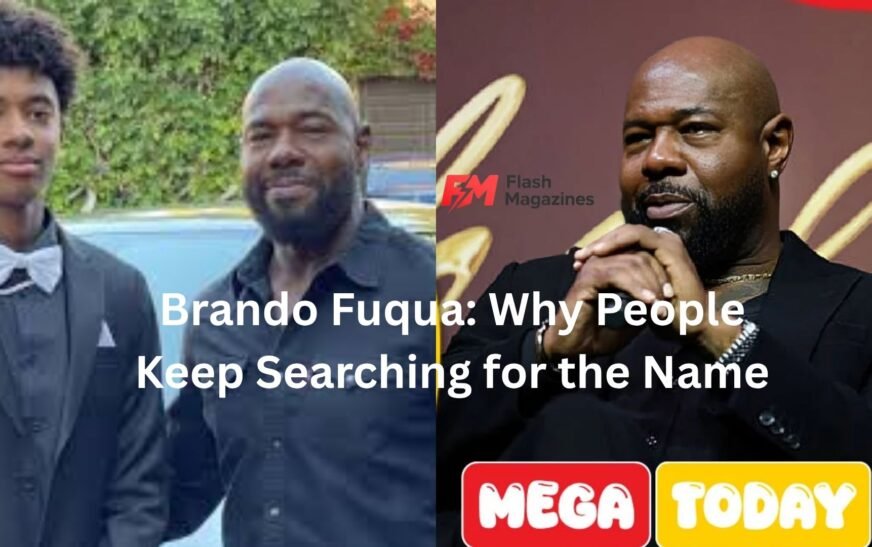
Some names stick in your head for reasons you can’t fully explain. Brando Fuqua is one of those names.
Maybe you saw it mentioned somewhere online. Maybe a friend dropped it casually in conversation. Maybe it appeared in a search suggestion and triggered that tiny moment of curiosity we all get sometimes. You think, “Who is that?” and before you know it, you’re digging through search results looking for context.
What makes it interesting is that there still isn’t a huge public profile attached to the name. And honestly, that mystery is part of the appeal.
We live in a time where almost everybody has an online footprint the size of a small city. People document breakfast, gym sessions, airport delays, and every random thought that pops into their head at 1 a.m. So when someone’s name starts circulating without an obvious, polished public identity behind it, people notice.
Brando Fuqua feels like one of those modern internet mysteries. Not in a dramatic conspiracy-theory way. More in the sense that the name has presence before it has explanation.
That happens more often than people realize.
The internet notices names before it knows stories
A few years ago, someone could quietly build a career, reputation, or network without much digital attention. Now the order is reversed. The internet catches names early.
Sometimes it’s a local entrepreneur getting mentioned in niche circles. Sometimes it’s an athlete before national coverage arrives. Sometimes it’s somebody tied to creative projects, music, media, or business who hasn’t fully stepped into the spotlight yet.
And sometimes a name simply has rhythm.
Brando Fuqua has that effect. It sounds memorable immediately. Sharp first name. Distinct last name. You hear it once and it doesn’t disappear five seconds later like dozens of other names do online every day.
That matters more than people think.
Brand recognition doesn’t always start with marketing campaigns or interviews. Often it starts with simple curiosity. Somebody searches the name. Then another person does. Then forums, social feeds, and recommendation engines start connecting dots.
Now the name exists independently from a biography.
That’s where things get interesting.
Why unusual names create attention
Let’s be honest. Some names sound built for headlines.
You could imagine “Brando Fuqua” attached to almost anything — film credits, sports commentary, startup culture, music production, fashion, even politics. The name carries a certain energy. It feels modern but also slightly cinematic.
That’s not an insult or exaggeration. Names shape perception all the time.
Think about how people react differently to names in professional settings. A memorable name can help someone stand out before they’ve even introduced themselves properly. Recruiters remember it. Audiences remember it. Social media algorithms tend to reward repeated searches and mentions too.
There’s a practical side to this.
If someone named John Smith launches a podcast, people may struggle to find it. If someone named Brando Fuqua launches one, chances are the search results become clearer very quickly.
Distinctiveness has value online.
And while there may not be endless verified information publicly available right now, the growing curiosity around the name says something by itself.
People search what catches their attention.
The rise of low-profile public figures
One of the strangest shifts in internet culture is how many recognizable people now operate quietly.
Not everyone wants celebrity treatment. In fact, plenty of influential people actively avoid it.
There are business founders with huge networks and almost no interviews online. Music producers with millions of streams but barely any public photos. Creative directors shaping major campaigns while staying mostly invisible to average audiences.
That used to be rare.
Now it’s becoming normal.
So when people look for more information about Brando Fuqua and don’t immediately find a polished media machine, that absence doesn’t necessarily mean irrelevance. Sometimes it means the opposite. Sometimes it means someone’s influence exists in smaller circles first.
You see this especially in industries built around relationships rather than mass fame.
For example, somebody can become extremely well known inside a regional business community while remaining nearly unknown nationally. Another person might be respected heavily in entertainment production without being the face of the project.
The internet creates this weird illusion that visibility equals importance. It doesn’t.
A person can matter deeply in certain spaces without flooding every platform.
Search culture changed everything
People used to discover public figures through television, newspapers, or radio. Now discovery works backward.
You see a name first.
Then you investigate.
That’s why searches around names like Brando Fuqua happen in the first place. Curiosity has become a form of entertainment.
You notice it constantly now. Someone trends briefly on social media. A clip circulates. A photo appears. A business deal gets mentioned. Suddenly thousands of people are opening tabs trying to piece together identity from fragments.
It feels almost investigative.
And because information moves so fast, people often expect complete biographies immediately. When that doesn’t happen, interest sometimes grows stronger instead of weaker.
Mystery still works online. Maybe even better than overexposure does.
There’s also another layer here people rarely talk about: digital authenticity.
Audiences are exhausted by overly polished internet personalities. Every platform is crowded with staged lifestyles and rehearsed opinions. So when someone appears more difficult to define, people often interpret that as more genuine.
Whether fair or unfair, scarcity creates intrigue.
Reputation now spreads sideways
Traditional fame moved from the top down. A magazine featured someone. A network promoted them. The public reacted afterward.
Today reputation spreads sideways.
One person mentions a name in a group chat. Somebody else reposts it. A niche audience starts paying attention. Search traffic grows quietly before mainstream visibility ever arrives.
That’s probably part of what’s happening with Brando Fuqua.
The name feels like it belongs to someone building recognition organically rather than through loud promotion. And strangely enough, that approach often lasts longer.
People trust discovery more when it feels accidental.
You can compare it to finding a restaurant with no giant advertising campaign but incredible word-of-mouth support. Those places usually feel more authentic than heavily branded chains.
The same psychology applies to people.
When audiences feel like they “found” someone naturally, interest becomes more personal.
There’s power in not oversharing
One thing worth appreciating today is restraint.
Everybody’s expected to share everything now. Opinions. Relationships. Family moments. Career updates. Failures. Political takes. Daily routines. It never ends.
Choosing not to live publicly has become unusual.
That alone can make somebody stand out.
If Brando Fuqua represents anything right now, it may simply be that modern curiosity grows stronger around people who aren’t constantly broadcasting themselves.
And honestly, that’s refreshing.
There’s something nice about encountering a name that hasn’t already been turned into a full-time content machine.
It reminds people that identity can still exist outside nonstop exposure.
A lot of younger internet users are starting to rethink oversharing too. They’ve watched public figures burn out from living online 24/7. They’ve seen how quickly audiences turn on people after one bad clip or misunderstood comment.
Privacy suddenly looks smarter than it did ten years ago.
The internet fills gaps with imagination
Of course, when information is limited, people start building narratives themselves.
That’s human nature.
Someone hears a unique name and imagines confidence, creativity, ambition, success, mystery, or influence attached to it. Sometimes those assumptions are accurate. Sometimes they’re wildly wrong.
But perception matters online whether we like it or not.
This happens constantly with emerging public figures. Before the actual story gets told, audiences create temporary versions of it in their heads.
A name becomes a character before it becomes a biography.
That can be helpful or dangerous depending on how things unfold later. Public curiosity creates opportunity, but it also creates pressure. Once people start searching your name regularly, expectations appear out of nowhere.
Suddenly strangers want context.
They want credentials. Background. Photos. Interviews. Opinions. Stories.
Not everyone wants that attention.
Why names become digital identities
The strange thing about internet culture is that names themselves have become brands long before businesses do.
Think about creators, athletes, founders, musicians, and influencers. Many of them start with nothing more than recognizable identity. The name becomes searchable first. Everything else grows afterward.
That process feels very relevant here.
Brando Fuqua sounds like a name people remember because it cuts through digital noise naturally. In crowded online environments, memorability matters almost as much as accomplishment at first.
That may sound shallow, but it’s real.
People can only follow, search, or discuss what they remember.
And memorable identity often opens doors to larger conversations later.
The curiosity probably won’t disappear
Here’s the thing. Once the internet becomes interested in a name, that interest tends to linger.
Searches continue.
People revisit the question later.
New information eventually surfaces, whether through projects, interviews, business ventures, social media activity, or public appearances. Sometimes the story grows slowly over years before suddenly becoming visible everywhere at once.
We’ve seen that pattern repeatedly.
The early stage always looks similar: scattered curiosity, limited information, increasing searches.
That’s part of what makes the topic around Brando Fuqua interesting right now. The curiosity itself has become the story.
And maybe that’s enough for the moment.
Not every public identity needs to arrive fully packaged overnight. Sometimes people become interesting precisely because they aren’t immediately explainable.
In an internet environment overloaded with noise, mystery still cuts through.
That’s rare now.
And probably why people keep searching the name.